
Turn leak detection into a daily maintenance tool
Vergeer Holland uses acoustic inspection to spot hidden leaks faster, support safer operations, and keep maintenance moving across multiple sites
Inside Vergeer Holland
Vergeer Holland ages, processes and packs cheese for customers all over the world. From their production sites in Reeuwijk, Woerden and Bodegraven they handle large volumes of cheese in many shapes and sizes. The work moves fast and demands reliable equipment, which makes maintenance a key part of daily operations.
The planned maintenance team, led by Jos Lievisse, handles all production lines across three locations. They deal with mechanical and electrical work, vast amounts of compressed air systems, and gas installations used in cheese processing and packaging.
Compressed air has always been a key focus. Leaks cost money, waste energy, and can easily go unnoticed when you rely on the human ear alone. The same goes for mixture gas, where leaks can pose a hidden safety risk as the gas is odorless due to food safety. Vergeer wanted more reliable insight without depending on hearing alone.
/1920%20x%201080%20(best%20quality%20and%20size)/Vergeer%20factory-1.jpeg?width=1235&height=1075&name=Vergeer%20factory-1.jpeg "Vergeer factory-1")
The challenge
Hidden leaks in air and gas systems
For years, leak detection meant walking through the plant and listening. Regular inspection happened on Saturdays when the site was shut down, which made the work expensive. The team searched for leaks in machines and in the main network, but these checks also showed a bigger issue. With no pressure on the lines, they missed many leaks that only appear during production. Even in a new plant like Woerden some leaks stayed out of sight. Older buildings made the problem even harder to control. One or two checks per year simply did not give the team enough insight, and they often found more problems than they had time to fix during the shutdown.
Vergeer Holland also uses mixed gas to remove oxygen from packaging and extend shelf life. The gas is not flammable, but the installation still carries profound risk. A serious leak can create a life-threatening situation and trigger an evacuation. There are fixed gas detectors in the halls, but they only react once a certain concentration is reached. The team prefers to find leaks long before an alarm goes off.
Cost, energy use, and safety together made it clear that they needed a more reliable detection method that allows for more efficient use of downtime.
We did a full walkthrough once or twice a year on a Saturday when production was down. You find plenty of leaks that way, but you only catch part of them. You know many more stay hidden.
A new approach
Acoustic leak detection
Relying on hearing alone limited what the team could detect during busy production days. They knew more leaks were present, but the combination of running lines, background noise, and time pressure made it impossible to track everything down. That pushed them to look for a method that could give faster, clearer insight. That search led them to Sorama.
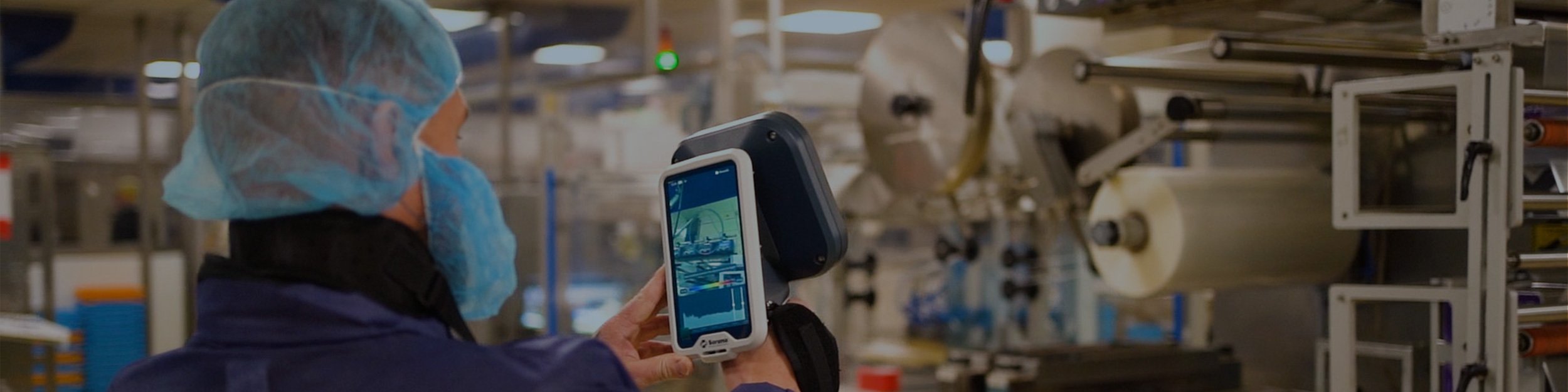
After Vergeer acquired an acoustic camera, the Sorama CAM iV64s, the value showed up immediately. The first inspection rounds revealed leaks that were simply impossible to spot with traditional tools. The camera localizes the exact point of a leak on screen, even when the line is running. It also picks up tiny, invisible leaks that you cannot hear or feel, in both compressed air and gas installations. Fixing these small losses adds up to significant savings over time.
/1920%20x%201080%20(best%20quality%20and%20size)/Vergeer%20employee%20using%20Sorama%20camera-1.jpeg?width=1152&height=939&name=Vergeer%20employee%20using%20Sorama%20camera-1.jpeg "Vergeer employee using Sorama camera-1")
/1920%20x%201080%20(best%20quality%20and%20size)/Vergeer%20employee%20using%20CAM%20iV64s.jpeg?width=977&height=1078&name=Vergeer%20employee%20using%20CAM%20iV64s.jpeg "Vergeer employee using CAM iV64s")
What the camera reveals?
The plant is noisy during production, which makes it nearly impossible to detect leaks by ear. The acoustic camera solves that problem. Its SPL (Sound Pressure Level) features allow the team to inspect at any moment, even with the lines running, instead of waiting for a shutdown.
Early inspections showed how much traditional methods leave unseen, not because the team missed anything, but because the tools could not expose this level of detail. One example was a linear vacuum cylinder that was leaking along its entire length. The image revealed uniform wear that would stay invisible and inaudible during normal operation.
The camera also exposed small leaks in service units, around filters or seals that normally sit tucked away in compact assemblies. These are leaks you cannot see or feel by hand, especially in a noisy environment.
From other factories Vergeer often hears, “We don’t need our own camera because we do a periodic inspection.” Their experience says otherwise. Even after a large maintenance stop or an external inspection, new leaks still show up the next day when they walk the plant with the camera. More frequent insight brings far better control over compressed air loss.
Using the acoustic camera in daily work
The acoustic camera now moves with the maintenance team through the plant. They use it during planned inspections, daily walkthroughs, and whenever a leak is suspected. In practice, they pick it up almost every day. New leaks still appear regularly, even shortly after a major maintenance stop, so the camera gives them fast insight instead of waiting for downtime.
The Sorama CAM iV64s is now an integral part of the team’s toolkit.
They use it for:
• planned maintenance
• real-time checks while the line is running
• investigations during faults or pressure issues
The camera was introduced during routine maintenance work. A small group received hands-on training and began using it right away. Others picked it up as they went because of its intuitive design.
/1920%20x%201080%20(best%20quality%20and%20size)/Vergeer-1.jpeg?width=975&height=956&name=Vergeer-1.jpeg "Vergeer-1")
Like any new tool, it does not integrate itself. You need to implement it in daily work. By now almost all technicians use it enthusiastically. The basics are simple. If you can use a smartphone, you can use the camera.
/1920%20x%201080%20(best%20quality%20and%20size)/Vergeer%20cheese.jpeg?width=1469&height=1077&name=Vergeer%20cheese.jpeg "Vergeer cheese")
Integrating the camera with Ultimo
Vergeer runs all technical service work through Ultimo, their maintenance management system. The acoustic camera fits straight into that workflow. On the floor, the technicians scan the machines’ QR code, inspect the machine with the camera, take a picture of the detected leak, and attach it to a new job in Ultimo. If the leak is easy to repair, they fix it on the spot. Otherwise, it goes into planning. This keeps everything traceable in one place.
The Sorama software also shows values like liters per minute and the difference between background noise and detected sound. Vergeer is exploring how to use that data more actively in reporting. Their goal is to show how many jobs came from leak detection, how much air loss they addressed, and what that means for cost and energy savings. With that insight, they expect the return on investment to be within just a few years, likely sooner.
The difference acoustic inspection makes
For Vergeer Holland, acoustic leak detection replaced yearly guesswork with daily precision. The camera helps the team catch leaks early, reduce energy waste, and strengthen safety across all sites. It reveals issues that would stay invisible with traditional methods. The benefit is clear. They now run with insights they would not want to work without again.
/1920%20x%201080%20(best%20quality%20and%20size)/SI_CAM%20iV64s_frequency%20selection.jpg?width=1920&height=1080&name=SI_CAM%20iV64s_frequency%20selection.jpg "SI_CAM iV64s_frequency selection")